Trump Signs “Morally Binding” AI Pledge With Top Tech CEOs
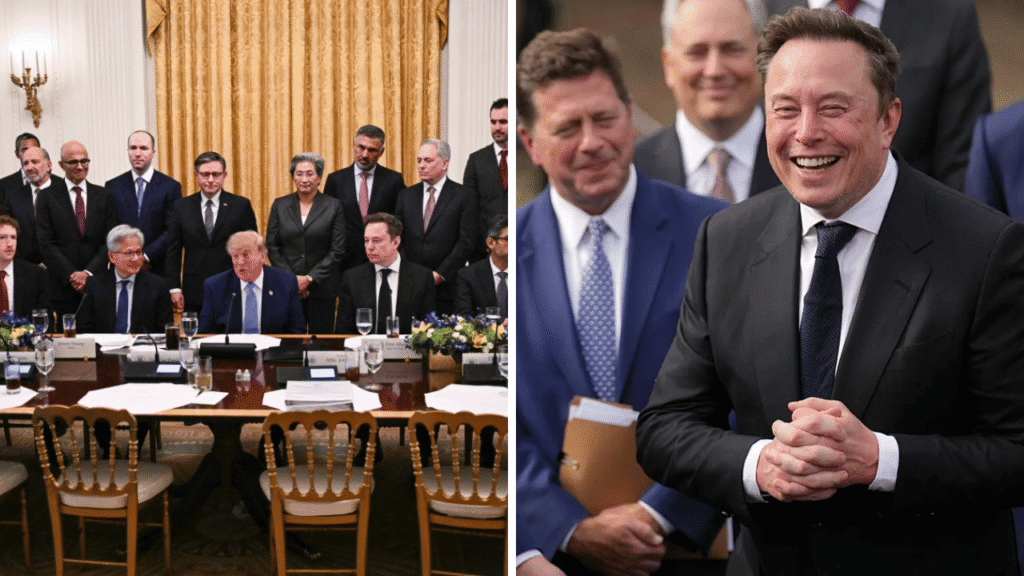
TRUMP AI PLEDGE
President Donald Trump has signed a “artificial intelligence pledge” among leading tech firms that is considered “morally binding,” turning the spotlight back on how the U.S. government and tech industry are handling AI development and infrastructure.
The alleged pledge comes as artificial intelligence continues to rise throughout technology, business, government and consumer items. It also underscores the growing importance of cooperation between federal lawmakers and top tech companies as the United States crafts its approach to AI.
To understand the significance of the promise, readers should distinguish the reported announcement from legally binding federal requirements, given the pledge’s particular language, participating companies, and implementation details.
The AI Pledge is a commitment to ethical AI development and use.
The alleged contract concerns artificial intelligence and the responsibilities of large technological companies in light of the rapid development of AI.
The phrase “morally binding” is crucial since it implies a commitment based on articulated principles or voluntary cooperation rather than a traditional federal law or regulation.
This is a significant distinction.
While a promise supported by the president may convey the administration’s policy goals and encourage firms to adopt certain practices, a legally binding duty would generally require a distinct legal basis.
Therefore, the practical consequence of the commitment for the corporations that will sign it will depend on what duties it would contain.
The Role of Big Tech Firms
Major IT companies are significant players in the development and deployment of advanced artificial intelligence (AI) systems.
Their businesses cover cloud computing, infrastructure for semiconductors, software, consumer apps and AI models. Thus, the decisions of these companies can influence the pace of development and deployment of artificial intelligence (AI) technology.
Cooperation can be based on a deal with government supported by industry without a new statute.
Firms can openly declare their position on AI safety, infrastructural and ethical growth through participation.
“Morally Binding” ≠ Legally Binding
The difference between a moral or voluntary obligation, and a legal obligation enforced in court, is a major question for the reader.
A binding rule has certain obligations that are derived from the competent authority.
Such a voluntary vow is usually based on trust that the organisations involved will deliver on their promises.
That makes the text of the agreement important.
The concerns of enforcement, reporting, openness and sanctions for non-compliance reveal whether a promise is a true operational structure or merely a statement of accepted ideals.
AI Policy a Major U.S. Priority Now
U.S. policymakers are increasingly worried about artificial intelligence.
Government agencies and politicians have been examining AI safety, national security, economic competitiveness, data, copyright, employment, privacy and infrastructure.
And IT companies are pouring money into computing power and A.I. research.
That creates a policy dilemma: The U.S. wants to stimulate technical innovation, but also to manage the risks that come with more advanced artificial intelligence (AI) systems.
One remedy to that conundrum is partnership between industry and government.
What the Deal Might Mean for AI Companies
What this pledge will signify in terms of concrete obligations remains to be seen.”
Potential areas of interest include AI safety practices, infrastructure development, transparency, security, and responsible deployment of artificial intelligence (AI) systems.
But the mere existence of a promise does not indicate that any corporation participating would be subject to the same operating restrictions as it would under government supervision.
So investors and techies will be monitoring to see if the commitments result in tangible changes in corporate policies.
Another important part of the conversation: AI infrastructure
The rapid rise of artificial intelligence has created a huge need for data centres, computing equipment and electricity.
Massive technology businesses are spending billions on the infrastructure needed to train and manage increasingly sophisticated artificial intelligence (AI) systems.
That rise has triggered broader issues about energy use, data centre building, semiconductor supply chains and the electrical supply.
So any arrangement between government and industry on AI might extend beyond software and AI models.
What Consumers Should Know
The biggest one is the distinction between a policy promise and a legislation for the customer.
A commitment won’t alter the mechanics of every AI product or create new consumer rights.
The effect will depend on what the participating companies commit to, and whether those commitments are translated into corporate policy, industry norms, or government regulation.
So consumers should be looking for certain formal guarantees, rather than assuming the news is a new statewide regulation of AI.
U.S. Artificial Intelligence Policy: The Broader Context
The purchase highlights the growing alignment between government policy and the development of artificial intelligence by the IT industry.
The US is sprinting towards the global AI finish line and debating how AI should be governed.
That implies government policy can influence tech firms’ investment decisions, product development and compliance strategies.
Working with industry can offer politicians access to technical expertise and a grasp of rapidly changing technologies.
The actual effect of the promise will depend on what signatory organisations actually do after signing and if other policy measures are introduced. Is AI commitment binding?
The U.S. administration and the tech companies see it as a voluntary or moral undertaking. The precise obligations will be set out in the specific language of the agreement.
Is the AI commitment a legally binding contract?
The term “morally binding” should not be used to suggest that it immediately creates the same legal obligations as would a federal statute or regulation. The legal status of the agreement will depend on the formal provisions of the agreement.
Tech CEOs join the fray
Big tech companies produce and operate most of the infrastructure and processes that support modern AI, therefore their involvement is relevant to any debate of AI development and governance.
Does the promise create a new law for AI?
There are two independent policy instruments — a promise and a federal law. The agreement as described shall not be construed as establishing a new federal statute unless subsequent legislation or regulation imposes such requirements.
And then what?
The key milestones to come will be the release of the agreement’s explicit commitments, the implementation strategies of the firms involved, and any subsequent federal policy actions.
Read More: AstroForge Is Giving Its Next Spacecraft an AI Brain to Fly More Autonomously