AstroForge Is Giving Its Next Spacecraft an AI Brain to Fly More Autonomously
Fly More Autonomously
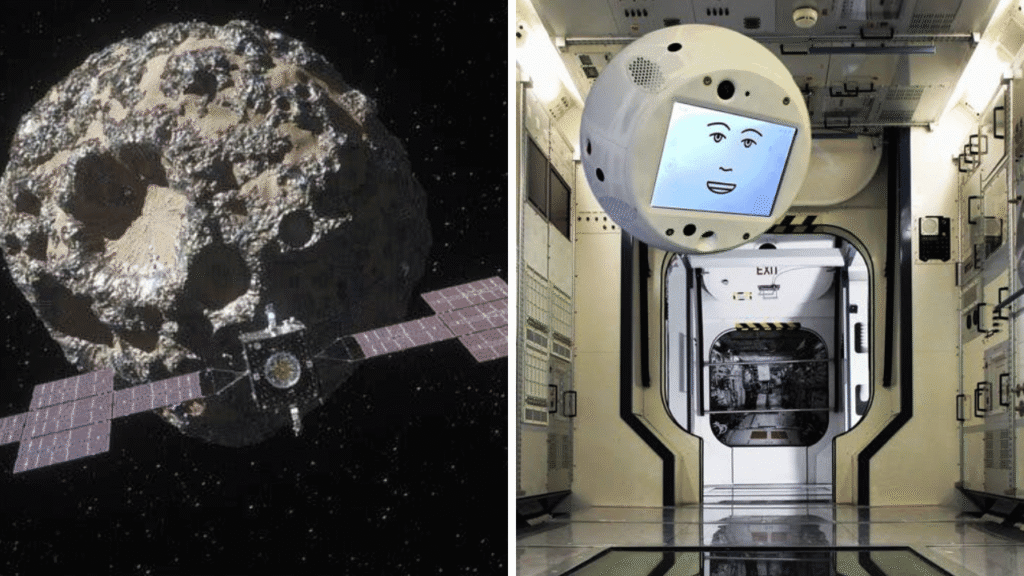
AstroForge is moving a step closer to more autonomous spaceship with plans to add a more powerful AI-powered brain to its next mission aimed to allow the vehicle to operate with less reliance on instructions delivered from Earth.
The California-based space firm has been constructing spacecraft that may one day prospect and process resources from asteroids. Its current strategy tackles a major difficulty in deep-space missions: the farther a spacecraft gets from Earth, the more difficult it is to keep continuous contact with mission control.
An autonomous spacecraft might be capable of on-board processing of information, reacting to changing conditions and making some operational decisions without waiting for a command from Earth.
That flexibility could be particularly useful for AstroForge as its missions go beyond relatively simple demos towards more ambitious asteroid expeditions.
Why AstroForge is Counting on More Autonomous Spacecraft
Spacecraft distant from Earth have a fundamental communications problem.
Radio communications move at the speed of light, therefore there is a delay between directives and responses from a spacecraft to mission control. The farther remote a task is, the worse the delay.
A spacecraft that had to wait for Earth to respond to every emergency may lose significant time.
On-board autonomy can help solve some of that problem.”
Rather of transmitting all the sensor data down to Earth for examination, a spacecraft may be able to do some of the analysis itself and decide what should happen next.
| Traditional approach | More autonomous approach |
|---|---|
| Ground teams handle many decisions | Spacecraft handles selected decisions onboard |
| Data may need to travel to Earth | Some data can be processed locally |
| Commands depend on communications | Certain responses can happen without waiting |
| Human operators monitor spacecraft behavior | Software can continuously monitor conditions |
| Greater reliance on mission control | Greater onboard decision-making |
That doesn’t imply an AI spaceship isn’t something to do with Earth. The journey is overseen but mission teams can still define objectives, limitations and safety criteria.
What the AI on AstroForge Can Do.
The phrase “AI brain” can make autonomous spacecraft sound more sci-fi than they really are.
In fact AI and advanced on-board software can be used in specialised occupations.
A spaceship may read sensor data, recognise particular situations, command observations, or decide which action best satisfies predefined mission objectives.
Someday an asteroid trip might include autonomous equipment to help with navigation, imaging, monitoring spacecraft health or for scientific enquiry.
What it will be able to do ultimately depends on what AstroForge brings on board and how much decision-making power engineers let it have.
“The big thing is moving from a spacecraft that’s mostly commanded, to a spacecraft that can make selective judgements based on the information it collects in space.
The Need for AI on Asteroid Missions
AstroForge’s long term approach is very much compatible with autonomy.
Asteroid exploration is one of those things that can be hard to predict. A spaceship may need to look at an object, figure out where and how it is positioned, gather data and then adjust its behaviour accordingly.
journey planners on the ground don’t always know what the spaceship will encounter before the voyage starts.
An autonomous system may respond to data that was not known when the first mission directives were generated.
This is particularly critical when spacecraft operations become increasingly sophisticated.
From intention to orders
You can order a conventional spacecraft to point an instrument at a given target, or to take a picture, or to do an explicit manoeuvre.
Or a more independent spacecraft might have a larger goal, and then use software on board to figure out how to achieve elements of the goal.
This technology needs much testing, autonomous choice should keep within clearly specified safety constraints.
AstroForge’s Bigger Goal: Mining Bigger Asteroids
The company’s interest in autonomous spacecraft is part of a broader goal of exploiting resources from asteroids.
AstroForge is building technology that may one day be able to identify and extract rich elements on asteroids.
That’s why it’s interesting to mine asteroids. They have elements that were created in conditions substantially different from those on the Earth.
But economically making such a sustainable business is tremendously challenging.
This would require a firm to overcome difficulties in spacecraft design, propulsion, navigation, communications, remote operations, asteroid characterisation and resource processing.
“Autonomy is just one piece of that much bigger puzzle.
How decision making onboard can reduce mission complexity
All space missions are resource-constrained.
Communications bandwidth constraints. The power is low. Limited resources for computation. There is also just so much time human operators have to monitor spaceship systems.
On-board information processing could contribute to reducing the data to be supplied.
For instance, a spacecraft could choose the most useful observations and send only these back to Earth, rather than broadcasting all the raw information.
This can be particularly helpful where there are few chances to communicate..
| Challenge | Potential role of onboard autonomy |
|---|---|
| Large volumes of sensor data | Filter and prioritize information |
| Communication delays | Enable selected local decisions |
| Changing spacecraft conditions | Monitor systems continuously |
| Navigation complexity | Support onboard calculations |
| Limited communications bandwidth | Send higher-priority information |
| Unexpected situations | Trigger predefined responses |
It’s not that AstroForge will use all of these capabilities on its upcoming voyage, but they are some potential uses of autonomous spacecraft technology.
AI Can’t Replace Humans In Mission Control
One of the biggest things to understand about autonomous spacecraft is that autonomy does not entail eliminating human operators.
Instead, people can go from issuing all possible instructions to controlling a machine that works within certain rules.
Mission controllers can create goals, constraints and emergency procedures.
The on-board system can then make certain basic judgements.
That concept might become more relevant when spacecraft travel farther from Earth and missions get more complex.
A system built on artificial intelligence can only do what its software, training, sensors and limits allow it to do . Monitoring by humans is still vital .
Design of an AI Spacecraft
Using AI in space is very different than operating an AI programme on a powerful computer on Earth.
A spaceship has to run with limited computing resources and with radiation, severe temperatures, power limits and hardware reliability.
Software also needs to be tested extensively.
In a typical software application a bug may cause a crash or incorrect output that can be repaired by an update.
A spaceship a million miles away can be a lot harder to fix after a mistake.
Which requires a mix of slick algorithms and conservative engineering for autonomous spacecraft.
How Autonomous Spacecraft Might Transform Future Missions
AstroForge is not alone in its efforts to increase autonomy on spacecraft.
NASA, other government space organisations, research institutes and commercial space enterprises have been developing onboard data-processing technology, autonomous navigation and robotics.
The big picture is important.
Given more sophisticated spacecraft, mission designers might be able to delegate more mundane decisions to onboard systems.
That could allow spacecraft to function in environments where constant connection with Earth is unfeasible.
In the end, the technology might support expeditions to asteroids, the Moon, Mars and even farther than that from Earth.
AstroForge AI Spacecraft: Important Facts
| Area | Significance |
|---|---|
| Company | AstroForge |
| Main focus | Asteroid-resource technology and spacecraft |
| New capability | Greater onboard autonomy |
| AI’s potential role | Processing information and supporting spacecraft decisions |
| Human role | Mission planning, supervision and safety constraints |
| Main benefit | Less dependence on constant ground instructions |
| Major challenge | Reliable autonomous operation in a harsh space environment |
| Broader importance | Could support increasingly complex deep-space missions |
what’s interesting is the technology
What’s intriguing about AstroForge is not only the concept of placing an AI system on a spacecraft.
The more significant development is the possibility of modifying how spaceships are run.
For decades, many space missions have depended significantly on teams on the ground to interpret data and deliver directives back to spacecraft.
That paradigm works effectively when communications are managed and spacecraft behaviour is predictable.
Future missions may need something else.
A spacecraft in an unknown environment could be subjected to situations its designers did not expect. “More intelligence on board the spacecraft could help it respond to those conditions more quickly.”
And it might make autonomous systems a more significant feature of commercial space exploration.
What’s Next for AstroForge
Ultimately, AstroForge’s autonomous approach will be judged on how the technology performs in actual mission operations.
One problem is to create autonomous software. Demonstrating it can safely manage a spacecraft in outer space is another matter.
Thus, the company’s progress will depend heavily on impending spacecraft and mission milestones.
The key indicators will be how well the spacecraft navigates, communicates, operates its systems and interprets observations without constant help from earth.
Those demonstrations could further illustrate the potential utility of AI-enabled autonomy for commercial asteroid exploration.
Final Thought
AstroForge’s ambition to give its future spaceship a more powerful AI brain is part of a larger trend in space exploration: spacecraft are increasingly built to make more decisions for themselves.
For asteroid missions that could be especially beneficial. A spacecraft away from Earth may need to make decisions about information, changing conditions and job priorities without waiting for instructions for each choice.
The technology does not eliminate the necessity for mission controllers, and autonomous systems still have significant reliability and engineering issues. But if AstroForge can show it can operate with more autonomy in space, it might be another example of how AI and powerful computing are transforming the way commercial spacecraft operate.
So the greater story is not just that an asteroid spacecraft is obtaining AI. It argues that future spacecraft may be expected to increasingly reason, react and operate on their own within precisely set bounds








1 thought on “AstroForge Is Giving Its Next Spacecraft an AI Brain to Fly More Autonomously”