Nike Shares Fall After Fiscal First-Quarter Results
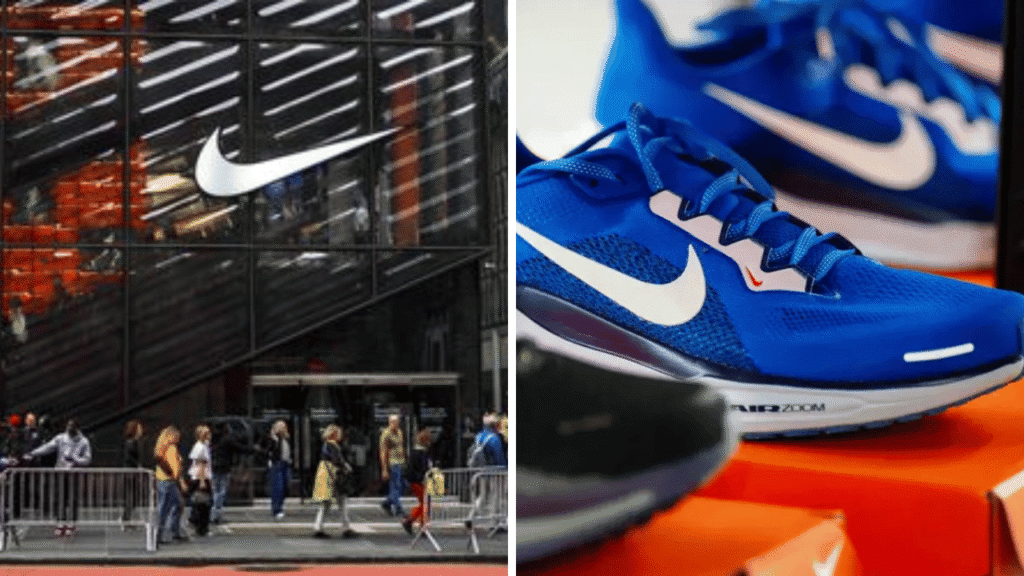
NIKE STOCK FALLS
Nike Shares Fall – Nike’s stock slipped following the sportswear giant’s fiscal first-quarter results, re-focusing attention on the company’s sales, profits, inventory levels and prospects.
The reaction draws attention to Nike’s latest quarterly release as investors continue to weigh whether the company’s efforts to reignite growth are getting traction in its key markets.
Nike remains one of the world’s largest athletic footwear and apparel companies, and its results are widely scrutinised by investors, retailers and the broader consumer sector.
Nike Fiscal First-Quarter Results Highlight Growth
Nike’s fiscal first-quarter report provides investors an updated snapshot of demand for its footwear, apparel and other athletic products.
Nike’s quarterly results are particularly noteworthy as the corporation has been dealing with a period of changing customer demand, product transitions and changes to its business strategy.
Investors usually focus for a few key things in Nike’s earnings report: sales, earnings per share, gross margin, inventories, and what management thinks is the forecast.
The market’s negative share-price response implies that investors were looking beyond the headline figures to what the numbers are saying about Nike’s near-term growth path.
What Investors Are Watching
| Key area | Why it matters for Nike |
|---|---|
| Revenue | Shows the level of consumer demand across Nike’s business |
| Earnings | Provides insight into profitability and operating performance |
| Gross margin | Helps measure pricing, product mix and cost pressures |
| Inventory | Indicates how effectively Nike is managing its product supply |
| Direct sales | Shows progress in Nike’s direct-to-consumer strategy |
| Wholesale | Remains an important part of Nike’s distribution network |
| China | A major international market that investors closely monitor |
| North America | One of Nike’s most important sources of revenue |
| Outlook | Gives investors clues about the company’s expectations ahead |
Why Nike Stock Is Likely to Soar Post-Earnings
Nike is a widely followed public corporation, so even relatively slight changes in expectations can move its stock price after an earnings release.
Investors don’t look at quarterly performance in a vacuum. They compare the latest figures with past quarters, estimates from Wall Street and the forward view from management.
That means the company can have good news in one area, but the shares can fall if investors had been hoping for a faster growth or a more optimistic outlook.
The link between sales growth and profitability is very essential for Nike.
A bigger sales number isn’t necessarily a higher earnings number if the company is coping with more promotional activity, higher costs or an unfavourable product mix.
The Nike product strategy is still a matter of debate
Nike has been emphasising product innovation and brand power as it tries to revive demand.
The company competes in multiple major areas including running, basketball, training and lifestyle footwear and athletic and casual clothes.
Sales momentum can be affected by new product introductions, but Nike also has to balance innovation with inventories.
If things aren’t moving as quickly as planned, merchants and brands may feel more promotional pressure. That can alter margins and potentially change the opinion of investors on future profitability.
So, Nike’s capacity to create desire for additional products is a key element of their larger growth narrative.
North America and China Remain Key Markets
Given the size and importance of the U.S. market, Nike’s success in North America is of considerable importance.
China, too, is a big foreign market for Nike and a key element of its long-term worldwide strategy.
Nike’s results in China are influenced by consumer spending conditions, competition, promotional activity and local market trends.
That’s why, investors tend to look more at regional sales performance rather than Nike’s consolidated figures.
Currency swings also affect the company’s reported financial results through its overseas operations even if underlying demand is generally consistent.
Both Nike Direct and Wholesale Sales Count
Nike sells their products through a mix of direct-to-consumer and wholesale channels.
Its direct business comprises Nike-owned shops and digital channels, while wholesale distribution enables products to reach customers through retailers and other partners.
That balance between both channels has become a fundamental component of Nike’s strategy.
Direct sales can offer more control of client connections and product presentation. Wholesale is a significant way to market and can broaden Nike’s reach .
So Nike investors are waiting to see if Nike can increase its business in both channels without putting too much promotional pressure on itself.
What Nike Investors Should Learn From The Earnings Reaction
Nike shares’ short-term decrease doesn’t solely define the company’s long-term success.
It’s not just if quarterly results were up or down that can move stock prices; it might be based on expectations about an earnings release, such as forecast and management commentary.
The biggest challenges for Nike are whether it can speed up revenue growth, steady profitability, and whether its product approach will create lasting demand.
Inventory levels and promotional activities will also be on investors’ radar, as those have an impact on profitability.
Another big factor will be the company’s ability to sustain the power of its global brand while adapting to shifting consumer tastes.
Nike Enters Competitive Athletic-Wear Market
Nike competes in a highly competitive sporting shoes and apparel market.
Competition from established brands and faster-growing rivals in running, lifestyle footwear and performance apparel threatens the corporation.
Consumer preferences can also change swiftly, especially when new shoe styles, partnerships or performance technology grab the attention.
Nike thus has to sustain product momentum and safeguard its brand positioning.
The results for the fiscal first quarter provide another data point for investors considering how well the company is navigating that climate.
Nike Stock Outlook Is More Than One Quarter
Nike’s first quarter earnings have put the company’s growth strategy back in the spotlight.
Nike shares are down as investors are scrutinising the recent financial performance and the signals from management.
However, one quarter does not make a long-term trend.
For Nike investors and customers who follow Nike, the more important narrative will be whether the firm can continue to grow demand, shore up its product selection, manage inventory and maintain profitability as it competes across the global athletic industry.
Read More: NVIDIA Adds $150 Billion to Share Buyback Program: What It Means for Investors