Samsung Exynos 2700 Beats Snapdragon in Geekbench Tests, Reports Claim
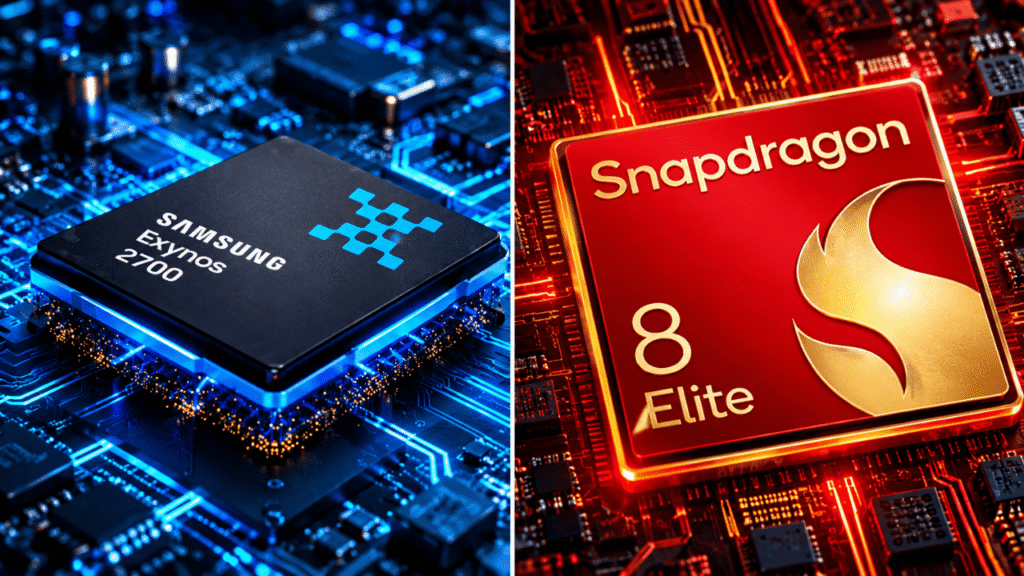
Exynos 2700 vs Snapdragon
Samsung Exynos 2700 Beats Snapdragon – Samsung’s next-generation Exynos chipset is attracting attention after reports claimed that the Exynos 2700 outperformed a competing Snapdragon processor in Geekbench tests. If the results hold up in independent testing, they could signal a significant step forward for Samsung’s in-house mobile chip development.
Benchmark comparisons are particularly important for Samsung because its flagship Galaxy phones have historically used different processors in different markets or configurations. Performance differences between Exynos and Snapdragon versions have therefore been closely watched by smartphone buyers.
However, a reported benchmark result is not the same as a confirmed real-world performance advantage. The exact Geekbench scores, device configuration, and Snapdragon chip used in the comparison need to be verified before drawing firm conclusions.
What Is the Samsung Exynos 2700?
The Exynos 2700 is discussed as a next-generation Samsung mobile processor. Samsung’s Exynos family powers smartphones and other mobile devices, combining CPU processing, graphics capabilities, connectivity, and other system functions.
A newer chipset can improve performance through architectural changes, manufacturing advances, power management, and graphics upgrades. But the name of a processor alone does not establish how fast or efficient it will be.
Samsung’s official specifications and independent testing will be needed to confirm the Exynos 2700’s final hardware configuration and capabilities.
What Do the Geekbench Results Suggest?
Geekbench is a benchmarking tool used to measure processor performance through standardized workloads. Its CPU tests commonly report single-core and multi-core scores.
- Single-core performance: Indicates how a processor performs on workloads that rely heavily on one CPU core.
- Multi-core performance: Measures performance across multiple CPU cores working together.
Reports that the Exynos 2700 beats a Snapdragon chip may refer to one or both of these measurements. Without the original benchmark listing, it is not possible to establish which Snapdragon processor was tested or whether the comparison used equivalent conditions.
The results should therefore be treated as preliminary claims rather than proof that the Exynos 2700 is universally faster.
Exynos 2700 vs Snapdragon: What Matters?

A meaningful comparison requires more than selecting the highest score from two benchmark listings.
| Comparison factor | Why it matters |
|---|---|
| Single-core score | Helps assess certain everyday and lightly threaded tasks |
| Multi-core score | Shows performance under workloads that use multiple CPU cores |
| GPU performance | Affects gaming, graphics, and some creative applications |
| Power efficiency | Influences battery consumption and heat |
| Sustained performance | Shows whether speed holds up during extended workloads |
| Device optimization | Software and cooling affect the final user experience |
Geekbench CPU scores do not directly measure every aspect of a smartphone. A chip can perform well in a short test but behave differently during extended gaming, video processing, or demanding multitasking.
The comparison also depends on which Snapdragon processor appears in the report. Without that information, claims of an overall victory are incomplete.
Could the Exynos 2700 Improve Galaxy Phones?
If Samsung delivers stronger CPU performance and good power efficiency, the Exynos 2700 could make future Galaxy devices more competitive.
Potential benefits could include faster app processing, smoother multitasking, and better performance in CPU-intensive applications. Improvements to the graphics processor could also benefit gaming, but CPU benchmarks alone cannot confirm that outcome.
Battery life will be equally important. Higher peak performance does not necessarily mean better efficiency, and a faster processor may still consume more power under heavy workloads.
The final experience will depend on the chip’s design, thermal management, software optimization, and the phone in which it is installed.
Why Exynos vs Snapdragon Comparisons Matter
Samsung’s processor choices have long attracted attention because consumers want consistent performance regardless of where they buy a Galaxy phone.
Differences between chip versions can affect gaming performance, camera processing, power consumption, and heat. Even when two processors deliver similar benchmark scores, their real-world behavior may differ.
For that reason, the Exynos 2700’s reported Geekbench results are worth watching, but the most useful comparison will come from retail devices tested under consistent conditions.
Independent reviews can establish whether any benchmark advantage translates into meaningful everyday benefits.
When Will Samsung Confirm the Exynos 2700?
The chipset’s specifications, supported devices, and launch timeline should be confirmed through Samsung’s official announcements. Until then, unverified reports and benchmark entries cannot establish which Galaxy models will use the processor or when those devices will arrive.
Readers should also be cautious about early benchmark listings. Test results can come from development hardware, and performance may change before a product reaches consumers.
What the Report Means for Smartphone Buyers
The reported Exynos 2700 result could indicate progress for Samsung’s processor efforts, but buyers should not choose a future phone based on a single benchmark claim.
Once official devices become available, compare independent CPU and GPU tests, sustained performance, battery life, thermal behavior, and camera results. Those measurements provide a more complete picture than Geekbench scores alone.
The bottom line: Reports that the Samsung Exynos 2700 beats a Snapdragon chip in Geekbench are potentially significant, but the exact scores and comparison target need verification. Until reliable benchmark data and retail-device reviews are available, the claim remains preliminary.
Sources
Read More: Galaxy S27 Series Leak Reveals New Designs and a Potential Camera Downgrade