Rate Hike by Fed Now Likely on Wednesday, Economists See Another Hike Coming
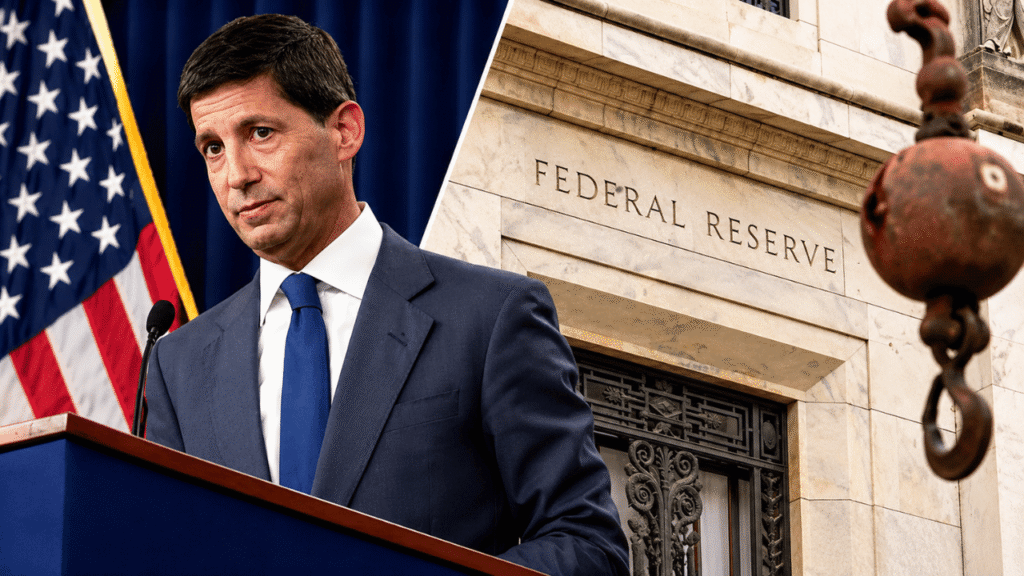
The Federal Reserve is now widely expected to raise interest rates on Wednesday
Rate Hike by Fed – Stubborn inflation and climbing oil prices are putting upward pressure on monetary policy and the Federal Reserve is expected to hike interest rates on Wednesday Sept. 16. The Fed is expected to lift rates by a quarter percentage point, widening the goal range for the federal funds rate from 3.50 percent to 3.75 percent to 3.75 percent to 4 percent, according to an 85 percent majority of economists polled by Reuters.
The Fed will act for the first time since July 2023. Crucially for consumers and investors, analysts are widely forecasting another surge either later this year or early in 2027.
Fed Rate Decision: Still High Inflation
Latest inflation data updates Fed rate expectations. U.S. consumer prices rose 0.4% in August, CPI inflation at 3.4% on an annualised basis. Core CPI, which excludes food and energy, rose 0.3% for the month and 2.4% from a year ago.
Higher gasoline and fuel prices have also been a challenge for policy makers. The impact of oil prices on transportation, industry and consumer prices complicates the Federal Reserve’s mission of bringing inflation back down to its 2% objective.
Higher inflation estimates have also led some big banks revising their projections. Goldman Sachs, JPMorgan, HSBC and Deutsche Bank are among the firms anticipating a quarter point rise at the September meeting.
Economists expect another wave
The September hike may not be an isolated case. A Reuters poll of economists last week showed 53% expected at least one more rate hike by March 2027. Markets also are pricing in a very high possibility of more hikes through mid next year.
That’s a big change from prior forecasts that the Federal Reserve may keep rates steady for much of 2026.
This is known as monetary policy – the central bank’s way of using interest rates and other tools to influence inflation, employment and economic activity.
If you are wondering what monetary policy is, the easiest way to describe it is that it is the mechanism by which a central bank controls financial conditions to assist promote price stability and create a healthy economy.
The projected rise ? Interest rates dropped before this ?
If you’re a consumer trying to figure out whether interest rates have come down, it is reliant upon whatever interest rate you’re looking at.
The Federal Reserve’s key rate is presently 3.50%-3.75%. But with borrowing costs such as mortgages, the federal funds rate doesn’t necessarily increase with them. Treasury yields, inflation expectations and financial market circumstances also impact yields on longer-term borrowing.
In fact, the average 30-year fixed mortgage in the U.S. has topped 6.85% – the highest since June 2025.
That means a Fed raise might put pressure on consumers even if individual loan rates don’t change significantly straight away.
Fed increases rates; mortgage rates go up
Interest rate hikes are especially sensitive for home buyers. Higher rates also mean higher monthly mortgage payments and therefore a cap on what a buyer may afford to borrow.
Customers should note that a 15-year mortgage vs. a 30-year mortgage usually means a higher monthly payment, but it can mean less interest paid over the life of the loan. If you get a 30-year mortgage, you’ll typically pay less each month, but you’ll end up paying more in interest over the life of the loan.
A U.S. mortgage calculator or a mortgage calculator WI will assist purchasers estimate monthly payments at various interest rates, loan sizes and payback periods.
The recent rise in borrowing rates has already hit demand. Mortgage applications declined 2.7 percent last week. Refinancing activity fell 6.2 percent.
What the interest rate rise means for bonds and savings
Higher rates are also good news for savers. When banks raise deposit rates, they pay higher rates on deposits, and people can get a better income on savings accounts and some certificates of deposit.
The U.S. savings bond calculator allows you to calculate the value of qualified U.S. government savings bonds based on purchase price, maturity and interest features.
But bond investors are a bit more smart. When the interest rate rises, older bonds with lower interest rates may become less valuable, while new bonds with higher interest rates may be issued.
Monetary Policy, Regulation, and the Wider Economy
With inflation still over the Fed’s objective, the debate over monetary limitations and central bank independence has gained importance.
Monetary Economics is the study of money and banks. Monetary economics searches may be monetary monetary. But more importantly, monetary policy and the decisions that central banks make that impact borrowing, spending, investment and inflation.
Other economic models such as modern monetary theory have differing perspectives on government spending, inflation and the function of monetary institutions. But the Fed’s goal today is more urgent: to curb inflation without unduly impeding economic growth.
Fed Rate Hike: Key Takeaways
| Item | Latest expectation |
|---|---|
| Fed meeting | September 15–16, 2026 |
| Expected decision | 25-basis-point rate hike |
| Current Fed rate | 3.50%-3.75% |
| Expected new range | 3.75%-4.00% |
| Economists expecting hike | 85% |
| Economists expecting another hike by March 2027 | 53% |
| Latest 30-year mortgage rate | 6.85% |
When Will Fed Make Announcement?
The Federal Open Market Committee meets Sept. 15-16, with the policy decision and news conference on Wednesday. The Federal Reserve will have a two-day meeting and a news conference on September 16.
Policymakers are likely to deliver the predicted quarter-point hike, and then all eyes will be on what the Fed does next.
Analysts are increasingly of the view that Wednesday’s hike is the start of another period of tightening rather than the end of the current rate cycle.
also read: OpenAI IPO Won’t Happen in 2026 as Sam Altman Warns of AI Safety Risks







1 thought on “Rate Hike by Fed Now Likely on Wednesday, Economists See Another Hike Coming”