Oura’s $2.2 Billion IPO Hits Pause as Market Uncertainty Builds
Oura shelves its $2.2B IPO
Oura’s $2.2 Billion IPO – Oura’s much-anticipated $2.2 billion IPO is on hold due to market uncertainty, putting one of the most carefully watched consumer health-tech listings in the spotlight.
The firm behind the famous Oura Ring has gotten plenty of attention as wearable electronics extends beyond only fitness tracking to include sleep, recovery, heart health and other wellness indicators.
Investors would have yet another avenue to play the expanding wearable technology industry with a public listing. But instability in the financial markets can make the timing of an IPO as essential as the underlying operations of the company.
The delay is a reminder of the hurdles private tech businesses confront as they prepare to go public, including Oura.
Oura’s IPO Plans Face a More Uncertain Market
Oura was a hot prospect for a technology listing, with a reported $2.2 billion valuation for its IPO.
But IPO markets can shift fast.
Companies thinking about an IPO will have to weigh factors such as investor demand, market volatility, interest rates, valuations for technology stocks and the performance of recently listed companies.
“Less predictability in market conditions means companies can wait or re-evaluate an IPO rather than proceeding with one under less favourable conditions.
That seems to be the wider context around Oura’s alleged IPO postponement.
A delay does not mean the company has abandoned its efforts to go public. Alternatively, it can buy the company more time to measure investor sentiment and decide if the market environment is conducive to a listing.
Why Oura Became a Major Wearable Technology Company
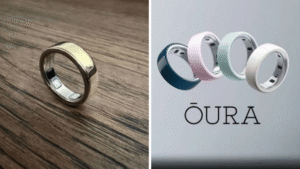
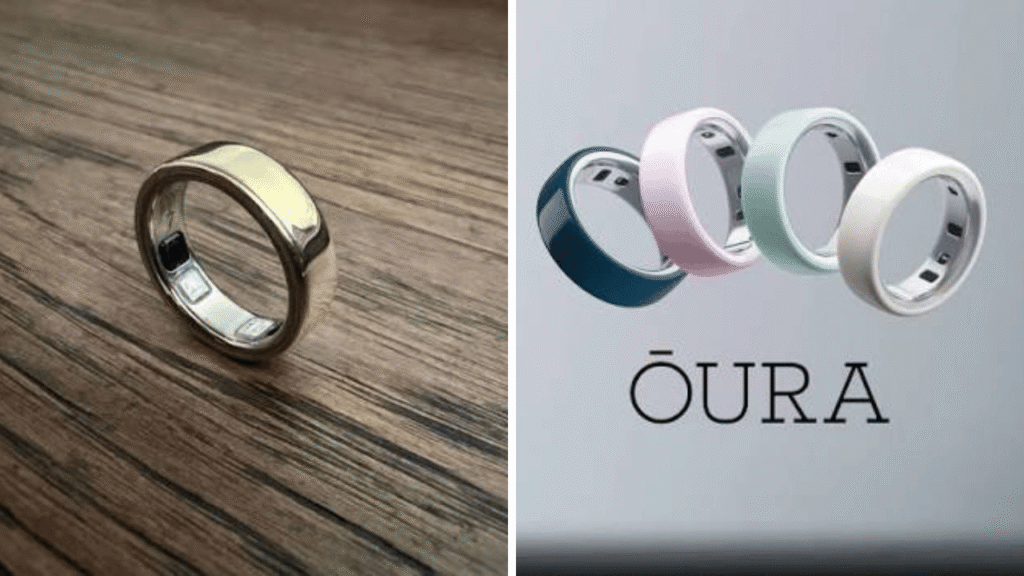
Oura is a wearable technology company, best known for the Oura Ring, a small wearable that tracks parameters linked to health and wellness.
Unlike standard smartwatches, the Oura Ring is designed for constant wear and focuses on passive health tracking.
The company’s product has carved out a unique place in the wearable market, especially among consumers looking for sleep and recovery information.
And that stance has also allowed Oura to capitalise on a bigger shift in consumer technology.
Wearables are becoming more and more commonly utilised not only to count steps, but to give information relating to sleep, activity, recuperation and other areas of everyday health.
Oura Ring gives company a different IPO story
The Oura IPO narrative is inextricably tied to the success of the Oura Ring.
Smartwatch firms compete in a number of categories including communications, apps, fitness, payments and entertainment.
Oura has gone a little more specialised.
The ring itself focuses on health and wellness tracking, making a product category somewhere between traditional jewellery and connected consumer electronics.
That specialisation could be significant as Oura looks to grow its business and reach more people.
But going public would also subject the company to more scrutiny on revenue growth, profitability, client retention, subscription revenue and competition.
The $2.2 Billion Number Matters For Investors
The $2.2 billion value cited provides an important point of reference for the Oura IPO story.
In an IPO valuation, an IPO, the market is asked to assign a price to a company when it goes public.
But a private-market valuation and a public-market valuation are not necessarily the same thing.
The price of an IPO is ultimately determined by a combination of investor appetite, market conditions, and the company’s financial disclosures.
That means that the claimed $2.2 billion amount should not be taken at face value as a final value investors would give to Oura were and if the business completes a public offering.
The real pricing procedure of the IPO would give a better sense of how the public investors value the business.
Why Uncertainty in the Market Can Deter an IPO
Timing of IPO is very significant especially in the times of financial market volatility.
When a firm is prepared to list its shares it usually needs substantial demand from institutional and other investors. The company may suffer pressure on valuation or demand if investors grow more cautious on emerging technology stocks.
IPO sentiment can be affected by the following factors:
| Market factor | Potential relevance to an IPO |
|---|---|
| Stock-market volatility | Can make new listings harder to price |
| Interest rates | Influence how investors value growth companies |
| Technology-stock performance | Provides a reference for public-market sentiment |
| IPO demand | Determines how much investor appetite exists |
| Economic uncertainty | Can encourage investors to become more selective |
| Recent IPO performance | Can influence confidence in new offerings |
Sometimes companies decide to wait instead of going straight for an IPO since these things can change very quickly.
What an Oura Offering Could Mean for Investors
Should Oura ever go public, investors would have a publicly traded firm focusing on connected health and wearable technology.
That would provide the public market another company to analyse with bigger technology and consumer electronics industries.
But Oura would also be subject to the same pressures as other publicly traded corporations.
Investors will likely focus on its rate of growth, operating expenses, client acquisition costs, recurring revenue, hardware sales and subscription economics.
And it would become increasingly crucial that the corporation be able to retain demand for its products.
Investors may be looking closely at Oura’s subscription model.
Oura’s business isn’t only about selling gear.
Software and subscription-based features are part of the company’s wider ecosystem, meaning that recurring client revenue is a key component of its business model.
Subscription revenue can give firms a more regular source of income than one-time hardware purchases.
That can make customer retention more crucial for investors.
If users keep paying for services after acquiring an Oura Ring, the company might make money beyond the original hardware sale.
Subscription firms also have to continuously prove their worth to keep customers paying over and over again.
The competition issue remains an important one.
Oura would reach the public market competing in the larger wearable technology business.
Products sold by technology firms such as Apple, Samsung and Garmin already allow a range of health and fitness measurements to be tracked.
The Oura Ring is smaller and more health-oriented than most smartwatches, yet competition can still influence pricing, client acquisition, and product development.
Wearable technology is likewise changing rapidly.
As sensors shrink and software gets smarter, firms need to continue investing in new products and services to remain relevant.
What the Oura IPO Freeze Doesn’t Mean
The halt in IPO plans shouldn’t be read as the death knell of Oura’s public-market aspirations.
There are various reasons companies could delay an IPO, including market conditions, value expectations and investor demand.
A delayed offering could be postponed until financial markets are more amenable to fresh listings.
That’s why the real question for watchers is not whether Oura goes public now, but how it adapts to shifting market conditions.
What Investors Will Watch Next: Oura Goes Public
The future of the Oura IPO narrative could rely on market circumstances and its aspirations to acquire public financing.
Investors and technology analysts will be looking for news of a possible filing, valuation, offering size, financial performance and timing.
Reportedly valued at $2.2 billion, until an official offering goes ahead Oura’s IPO valuation should be viewed as a benchmark, not a guarantyd public-market valuation.
The wider wearable market will also continue to be relevant.
Oura’s success will be not just a function of the IPO climate, but also of customer demand for health-focused wearables and the company’s ability to develop a viable business around its hardware and services.
The bigger picture: 2026 IPO market
Oura’s predicament is emblematic of a bigger difficulty confronting private IT companies looking to go public.
There is more to going public than just hitting a certain valuation. Companies also need to consider market timing, investor appetite and the expense of operating under public market scrutiny.
A postponed IPO means investors will need to wait to get their hands on a company that has made a splash in the private market.
The postponement gives Oura more time to determine if the conditions support the valuation and demand of a public offering.
Its next major IPO announcement might be a crucial test of investor interest for consumer health technologies.
Read More: PlayStation Plus Subscribers Have Until October 20 to Play These Games