Florida’s Brightline Gets $490 Million Lifeline as Bankruptcy Proceedings Begin
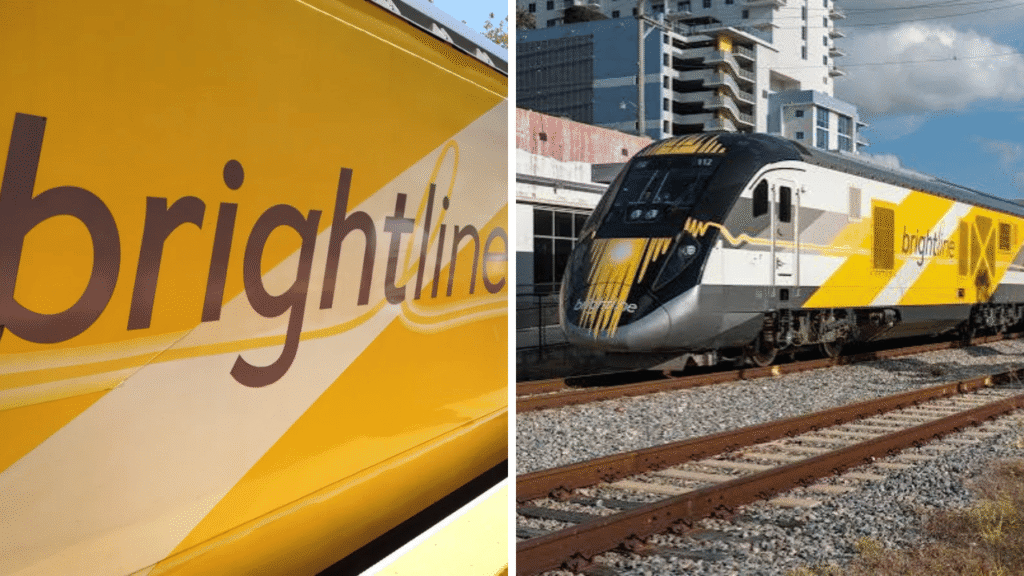
Florida rail service and its future
The Florida passenger train service Florida Brightline is at a financial crossroads, about to enter bankruptcy proceedings and reportedly in line for a $490 million financial lifeline.
The development shines a sharper financial focus on one of the most keenly followed private passenger-rail projects in the United States. Brightline has been developing a rail network connecting major population centres in Florida for years, providing travellers with an alternative to driving on the state’s increasingly congested roads.
Now the company’s financial state leaves Florida residents and passengers with a deeper question: What does the $490 million lifeline entail for Brightline’s future?
The question for riders is whether trains will continue to run as normal. For investors, creditors and transit officials the stakes are significantly higher. It’s a matter of whether Brightline can get its finances in order while running an expensive passenger-rail network and pursuing long-term development plans.
What’s going on with Brightline?
Brightline is an intercity passenger train service in Florida which has created a transportation network connecting key sites without the need for travellers to drive.
The organisation has grown especially relevant in light of Florida’s transportation alternatives considering the state’s significant population expansion, traffic congestion and ongoing need for transit between major metropolitan regions.
As Brightline files for bankruptcy, $490 million financing deal reported
Such a financial lifeline might potentially offer a corporation greater liquidity as it works through a restructure. But the fact that new financing is available does not automatically suggest that financial problems have been permanently handled.
Brightline at a Glance
| Issue | What It Means |
|---|---|
| Company | Brightline |
| Location | Florida |
| Business | Intercity passenger rail |
| Reported financial support | $490 million |
| Current development | Bankruptcy proceedings |
| Main public concern | Continued rail operations and financial stability |
| Broader importance | Florida transportation and private passenger rail |
$490 Million: It Matters
Passenger rail is a very capital intensive enterprise.
Rail businesses need to upkeep trains, stations, tracks, signalling systems, technology and other infrastructure, as well as pay personnel and cover operational expenditures.
A software corporation can scale without having a lot of physical infrastructure, unlike a passenger railway which depends on a big network of expensive assets.
This is why access to finance is extremely crucial.
The reported $490 million lifeline could provide Brightline more financial freedom as it seeks to restructure. The terms of the financing, and the bankruptcy actions that are involved, determine the nature of the money and the claims or liabilities it carries.
For everyday riders, the more pertinent question is: Will Brightline survive?
The effect of bankruptcy proceedings on passengers
The word “bankruptcy” can be frightening to customers, but a bankruptcy case does not necessarily indicate a firm closes.
In the United States, bankruptcy is a legal procedure that provides organisations that are in financial difficulties with the opportunity to restructure their obligations, negotiate with creditors, and continue operating under the supervision of a court or the applicable reorganisation regulations.
How this affects passengers depends on the precise nature of the bankruptcy and the company’s operating status.
Brightline motorcyclists should look out for:
- Whether normal passenger services remain
- If ticketing and reservation will still be accessible
- Changes in service frequency
- Whether expansion projects go on hold
- Whether the expenses or the commercial policies change
- If the corporation does strike deals with creditors
The $490 million funding could be especially important if it provides the railway with enough liquidity to keep operating while it restructures.
Brightline Is Now More Than a Train Service
Brightline is more than just its trains in Florida.
The enterprise is an uncommon model in the United States — a privately run passenger railway serving major population centres and not only sponsored by the standard government funded Amtrak model.
That makes Brightline a keenly followed experiment in American transit.
Florida is also an important market for passenger rail, given its population expansion and concentration of key vacation and business locations.
Good connections between metro areas are good for tourists, workers, students and residents who otherwise would have to depend on cars or air travel.
So the company’s financial troubles are not confined to its own balance sheet.
The Bigger Challenge: Creating Passenger Rail in America
Brightline’s case underscores the tough economics of passenger rail in the U.S.
Passenger rail requires a large upfront investment, but revenue relies on enough patronage to fund continuing operating and capital costs.
The success of a service depends on a mix of:
High ridership, competitive travel times, stable operations, strong pricing, sustainable finance
If one side of that equation breaks down, it might put more financial stress on.
Roads and aircraft have a large infrastructure and established consumer habits . They also compete with railways .
This makes private passenger rail extremely tough.
What May Happen in the Restructuring
Passengers, creditors and transportation stakeholders will be watching attentively the next phase of Brightline’s financial picture.
Many places will matter.
Debt and Debt Agreements
Bankruptcy restructuring is primarily aimed at resolving financial commitments. The company’s arrangements with creditors might affect the amount of financial pressure that persists after restructuring.
Day to Day Operations
Passengers will have concerns about the continued reliable operation of trains. Keeping the service running can be vital to retain customer confidence and revenues during restructure.
Growth Plans
Brightline has been previously linked to efforts to add passenger rail service in Florida. Future projects could be affected in terms of timing, size or finance by a financial restructuring.
Changes in expansion plans should be kept apart from the operation of existing services.
Long Term Funding
The $490 million rescue could offer some short-term financial relief, but investors and industry observers will still be interested in Brightline’s longer-term financing needs.
A big influx of capital can provide some breathing space, but need not solve all the structural financial problems.
Implication for Florida Travellers
For Florida residents, Brightline provides something increasingly useful in a fast-growing state: another method to travel between big attractions.
For a passenger, rail service can relieve some of the burden of long-distance driving.
Brightline’s financial stability is important even for those who aren’t investors.
If the company stays in business, passengers can take the railway instead of driving. Commuters, tourists and businesses reliant on the network may feel the impact if financial restructuring eventually leads to major changes to services.
The main difference now is between financial restructuring and an immediate shutdown. Bankruptcy proceedings alone do not indicate that passenger service will cease.
A Reason for Investors to Pay Attention
Investors and creditors will be looking through the headlines to $490 million.
The more salient considerations are how the financing is structured, how much debt Brightline has, the nature of operating cash flow, and if the railway can establish a viable financial model over the long haul.
Transportation business investors need to also look beyond the short-term revenue.
Infrastructure projects, for example, can take years of spending before they realise their full economic potential.
This is a delicate balance between keeping the lights on today and investing for growth tomorrow.
Brightline’s Financial Situation in Context
| Area | Why It Matters |
|---|---|
| $490 million lifeline | Provides additional financial resources |
| Bankruptcy proceedings | Create a framework for addressing financial obligations |
| Existing rail service | Determines the immediate impact on passengers |
| Ridership | Important source of operating revenue |
| Infrastructure costs | Major long-term financial requirement |
| Expansion | Could require additional capital |
| Florida population growth | Supports long-term transportation demand |
| Competition | Cars and air travel remain major alternatives |
What Florida Residents Should Watch Next
The next big developments are likely to come from official bankruptcy paperwork, court hearings and company announcements.
Consumers should take special note of statements including service cuts, timetable modifications, station operations or ticketing restrictions.
Transportation stakeholders will be interested to see if the restructure gives Brightline adequate financial stability to keep its current network.
Investors and creditors will check into the overall financial structure of the company.
So the $490 million is an important piece of the tale but it’s not the whole story.
The Future of Private Passenger Rail is also in Danger
The financial struggles of Brightline could serve as a significant case study for the future of privately funded passenger rail in the US.
Intercity travel in the country has been highly reliant on cars and planes for decades. Projects like Brightline have tried to prove that contemporary passenger rail can attract riders if it connects key destinations with competitive travel times and convenient stations.
The financial difficulties are the other side of the equation.
Building and operating passenger rail is expensive, and even a service with high public visibility needs to have a sustainable financial structure.
So Brightline’s reorganisation could take the spotlight far beyond Florida.
The Bottom Line for American Readers
Brightline’s anticipated $490 million financial lifeline is a critical development as the Florida passenger railway faces bankruptcy procedures.
Passengers will want to know immediately if service will be normal and if there will be any changes in timetables, pricing or routes. Creditors and investors will be seeking ways to restructure the company’s finances and whether its business model can stay afloat.
More broadly, the significance of Brightline for Florida is that it has become a key example of privately owned intercity passenger rail in the United States.
The next several months should give a better sense of how the financing is being used, how the bankruptcy process plays out and what it means for Brightline’s long-term destiny.
Read more: Meta Stock Gets a Major Boost as Muse Deal Adds Billions to Zuckerberg’s Wealth






2 thoughts on “Florida’s Brightline Gets $490 Million Lifeline as Bankruptcy Proceedings Begin”